
Understanding the Root Causes and How to Prevent Costly Damage
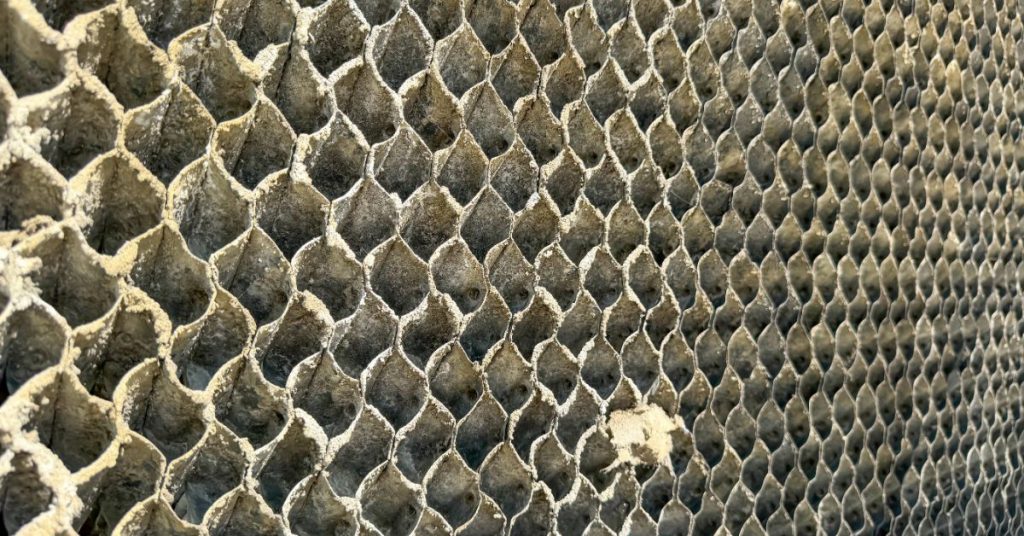
Cooling towers play a key role in removing heat in industrial and commercial systems, but they’re also very prone to scaling, one of the most common and expensive water treatment problems.
If left untreated, scaling can reduce system efficiency, increase energy costs, and lead to premature equipment failure. So what exactly causes scaling in cooling towers, and how can you prevent it?
Let’s break it down.
What is Scaling in Cooling Towers?
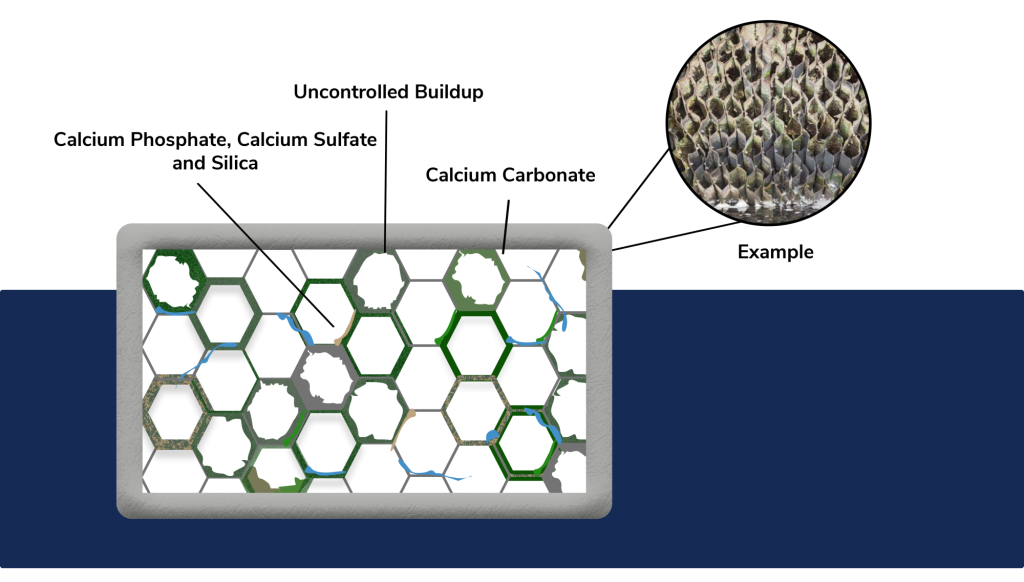
Scaling is the buildup of mineral deposits, primarily calcium carbonate, on heat exchange surfaces, piping, and other system components.
These deposits form a hard, insulating layer that:
- Reduces heat transfer efficiency
- Restricts water flow
- Increases energy consumption
- Leads to equipment damage over time
Main Causes of Scaling in Cooling Towers
1. High Calcium Hardness
One of the leading causes of cooling tower scale formation is high levels of calcium and magnesium in the makeup water.
As water evaporates in the cooling tower, these minerals become more concentrated. Eventually, they exceed their solubility limits and begin to precipitate out as scale.
2. Elevated Water Temperature
Higher temperatures reduce the solubility of certain minerals, especially calcium carbonate.
This means:
The hotter your system runs, the more likely minerals will come out of solution.
This is why scaling often occurs most aggressively on heat exchanger surfaces.
3. High pH Levels
Water with a high pH (alkaline conditions) promotes the formation of scale.
When pH rises:
Carbonate ions increase and calcium carbonate becomes more likely to form.
Maintaining proper cooling tower water chemistry is the best way to prevent this reaction.
4. Cycles of Concentration
Cooling towers reuse water, which leads to cycles of concentration (COC). Cycles of concentration refer to how many times the dissolved minerals in cooling tower water are concentrated compared to the incoming (makeup) water.
To control COC, cooling towers use blowdown. Blowdown is the process of removing a portion of water from a cooling tower system to control the buildup of dissolved solids.
Without proper blowdown or treatment:
- Mineral concentrations increase
- Scaling risk rises significantly
5. Poor Water Treatment Program
An ineffective or inconsistent cooling tower water treatment program is a major contributor to scaling.
Common issues include:
- Inadequate chemical dosing
- Lack of monitoring and control
- Failure to adjust for changing conditions
Without proper treatment, scale formation becomes almost inevitable.
6. Biological Fouling and Deposits
While scale is mineral-based, biofilm and debris can accelerate scaling by creating surfaces where minerals can attach and grow.
Biological fouling can:
- Block water flow
- Reduce heat transfer (makes systems less efficient)
- Biofilm insulates 3-4x more than mineral fouling
- Cause corrosion
- Lead to higher operating costs
This combination of fouling and scaling can severely interfere with how equipment works.
Why Scaling is a Serious Problem
Even a thin layer of scale can have major consequences:
- 1/8 inch of scale can reduce efficiency by up to 25%
- Increase energy costs due to poor heat transfer
- Higher maintenance and cleaning expenses
- Shortened equipment lifespan
How to Prevent Scaling in Cooling Towers Checklist
Preventing scale requires a proactive and strategic approach:
✔ Water Chemistry Control: Maintain proper pH, alkalinity, and hardness levels.
✔ Chemical Treatment Programs: Use scale inhibitors and dispersants tailored to your system.
✔ Routine Monitoring: Regular testing ensures conditions stay within optimal ranges.
✔ Blowdown Management: Control cycles of concentration to prevent mineral buildup.
✔ Expert Water Management Plans: Partnering with water treatment professionals ensures long-term system health and compliance.
Find the Right Water Treatment Partner
Scaling in cooling towers is a maintenance, performance and a cost issue. Understanding the root causes for scale is the first step toward prevention.
Partnering with a knowledgeable water treatment provider, like IWC Innovations, ensures your system is proactively managed, not reactively repaired. We tailor a strategy to your specific water chemistry and system demands, helping you:
- Improve system efficiency
- Reduce operational and energy costs
- Extend the life of your equipment
With expert guidance and a data-driven approach, you can move beyond simply addressing scaling and start preventing it altogether.