
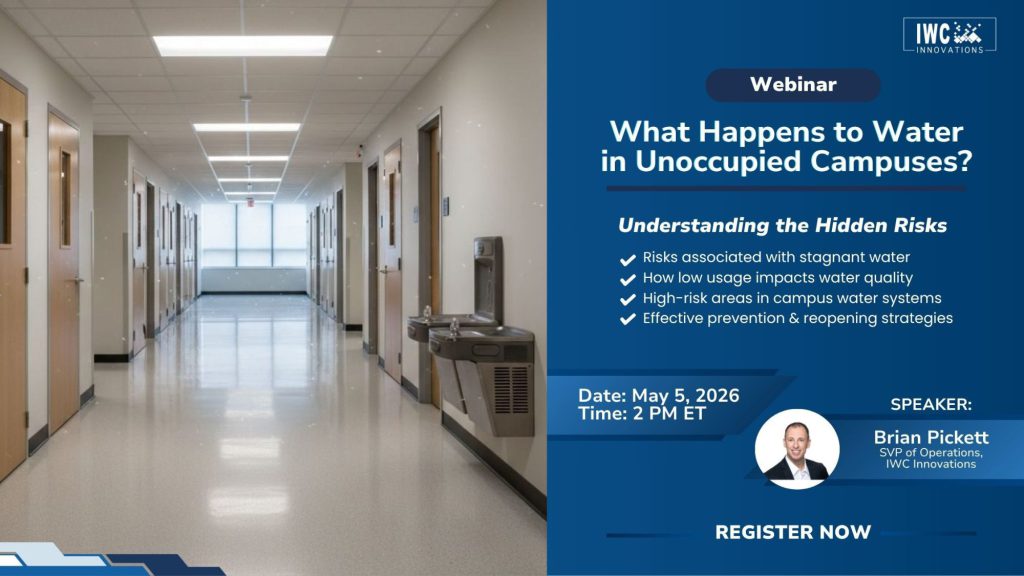

When campuses sit empty during breaks, holidays, or closures, water systems don’t stop. Reduced usage can lead to stagnation, disinfectant loss, and conditions that promote harmful bacteria like Legionella, creating serious health and operational risks.
In this webinar, we’ll explore what happens inside building water systems during low occupancy and why educational facilities are especially vulnerable. You’ll gain insight into real-world outbreaks, the evolving regulatory landscape (including ASHRAE 188 and CDC guidance), and what these changes mean for your facility.
Most importantly, you’ll walk away with practical strategies to reduce risk before, during, and after low occupancy, from identifying high-risk areas to implementing flushing protocols, monitoring water quality, and building a sustainable water management program.
In this webinar, you’ll learn how to:
- Understand risks associated with stagnant water
- Identify how low usage impacts water quality
- Recognize high-risk areas in campus water systems
- Implement effective prevention and reopening strategies
- Build and maintain a compliant water management program
Who should attend:
- Facilities and maintenance managers
- Environmental health & safety (EHS) professionals
- Campus operations and building managers
- Risk management and compliance teams
- School administrators and district leaders
- University housing and residential life staff
- Anyone responsible for water quality or building safety