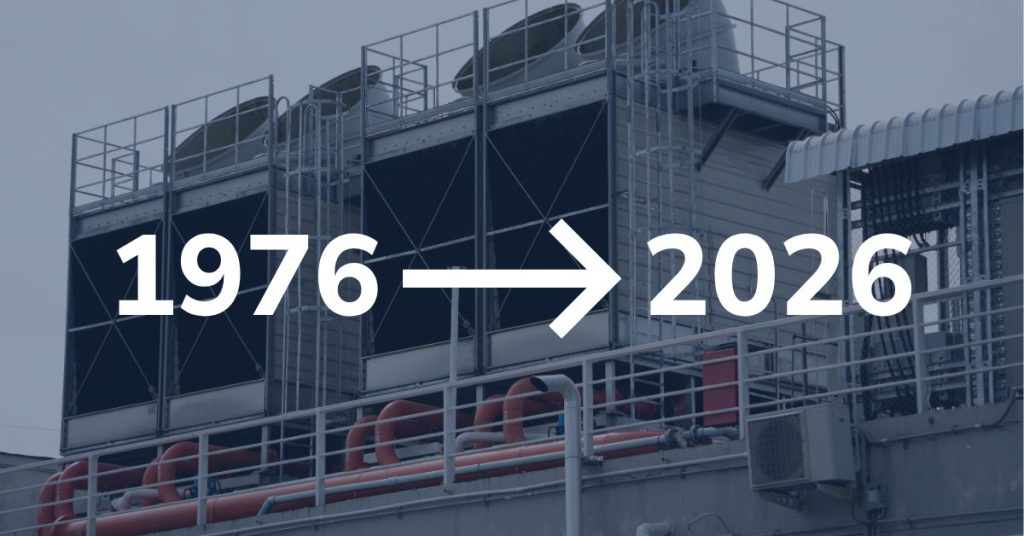

In July 1976, what began as a mysterious pneumonia outbreak among attendees of an American Legion convention in Philadelphia forever changed how we think about building water systems.
More than 2,000 people attended the convention at the Bellevue-Stratford Hotel. Within days, attendees began developing severe pneumonia-like symptoms. By the end of the investigation, 221 people had become ill and 34 had died. It would take months before the Centers for Disease Control and Prevention (CDC) identified the cause: a previously unknown bacterium that would become known as Legionella pneumophila.
Fifty years later, Legionnaires’ disease remains a significant public health concern. However, our understanding of how the disease develops, spreads, and can be prevented has evolved dramatically.
The Discovery That Changed Building Water Management
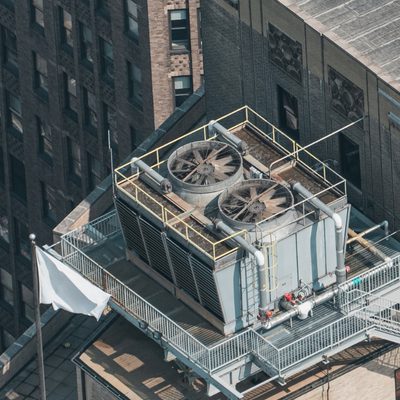
The original outbreak investigation uncovered that the hotel’s cooling tower had aerosolized water containing Legionella bacteria, allowing people to inhale contaminated droplets.
This finding established something we now take for granted, that building water systems can become reservoirs for dangerous bacteria when conditions allow them to grow.
Today, we know that Legionnaires’ disease occurs when three conditions exist:
- Legionella bacteria are present in a water system.
- Water is aerosolized and inhaled.
- A susceptible individual is exposed.
Understanding these three factors has become the foundation of modern Legionella prevention.
The Discovery of Biofilm
Just two years after the Philadelphia outbreak, microbiologist Dr. Bill Costerton and his colleagues fundamentally changed the way scientists viewed bacteria.
Rather than living independently, researchers discovered that most bacteria naturally exist in organized communities called biofilms, which are protective layers that attach to surfaces inside pipes and plumbing systems.
This discovery explained why Legionella can persist inside building water systems despite routine disinfection. Once established inside biofilm, bacteria become much more difficult to eliminate.
Today, biofilm management is recognized as one of the most important aspects of controlling Legionella risk.
Outbreaks Continued to Reinforce the Need for Prevention
Although awareness of Legionella increased, outbreaks continued around the world over the next few decades.
Notable outbreaks included:
- Stafford District Hospital (United Kingdom)
- Flower Exhibition (Netherlands)
- Melbourne Aquarium (Australia)
- Pittsburgh VA Hospital
- Bronx, New York
- Central Harlem, New York
Each outbreak reinforced the same lesson: reactive responses are not enough.
Preventing bacterial growth before illnesses occur is far more effective than responding after an outbreak has begun.
ASHRAE 188 Changed the Industry
A major turning point came in 2015 with the publication of ASHRAE Standard 188.
Rather than focusing solely on responding to positive Legionella tests, ASHRAE 188 established a proactive framework for managing risk through Water Management Programs (WMPs).
The standard requires building owners and operators to:
- Identify areas where Legionella could grow
- Establish control measures
- Monitor water system performance
- Document corrective actions
- Continuously verify program effectiveness
Today, ASHRAE 188 serves as the foundation for water management across healthcare, hospitality, higher education, manufacturing, commercial buildings, and many other industries.
Regulations Continue to Expand
One of the most significant changes over the past decade has been the rapid growth of Legionella-related regulations.
ASHRAE 188 has influenced requirements from organizations including:
- Centers for Medicare & Medicaid Services (CMS)
- The Joint Commission
- Numerous state Departments of Health
- Local health authorities

Individual states have also begun implementing their own legislation.
Examples include:
- New York City’s Local Law 159, requiring more frequent cooling tower testing.
- Ohio’s Water Management Program requirements for hospitals and residential care facilities.
- Illinois requirements for skilled nursing facilities.
- New Jersey’s S2188 legislation.
- Maryland House Bill 204.
Although these regulations differ by jurisdiction, the overall trend is clear: proactive water management is becoming an expected standard of care.
Health Departments Are Taking a Larger Role
Another important shift is the growing involvement of state and local health departments.
Today, many health departments actively investigate building water systems during Legionnaires’ disease cases, review Water Management Programs, and recommend or require corrective actions.
Requirements vary considerably between states, making it increasingly important for facilities to understand both national guidance and local regulations.
We've Learned That Cooling Towers Aren't the Only Risk
One of the biggest misconceptions about Legionella is that it’s only associated with cooling towers.
While cooling towers have been linked to many large outbreaks because they can disperse contaminated aerosols over wide areas, they are far from the only source.
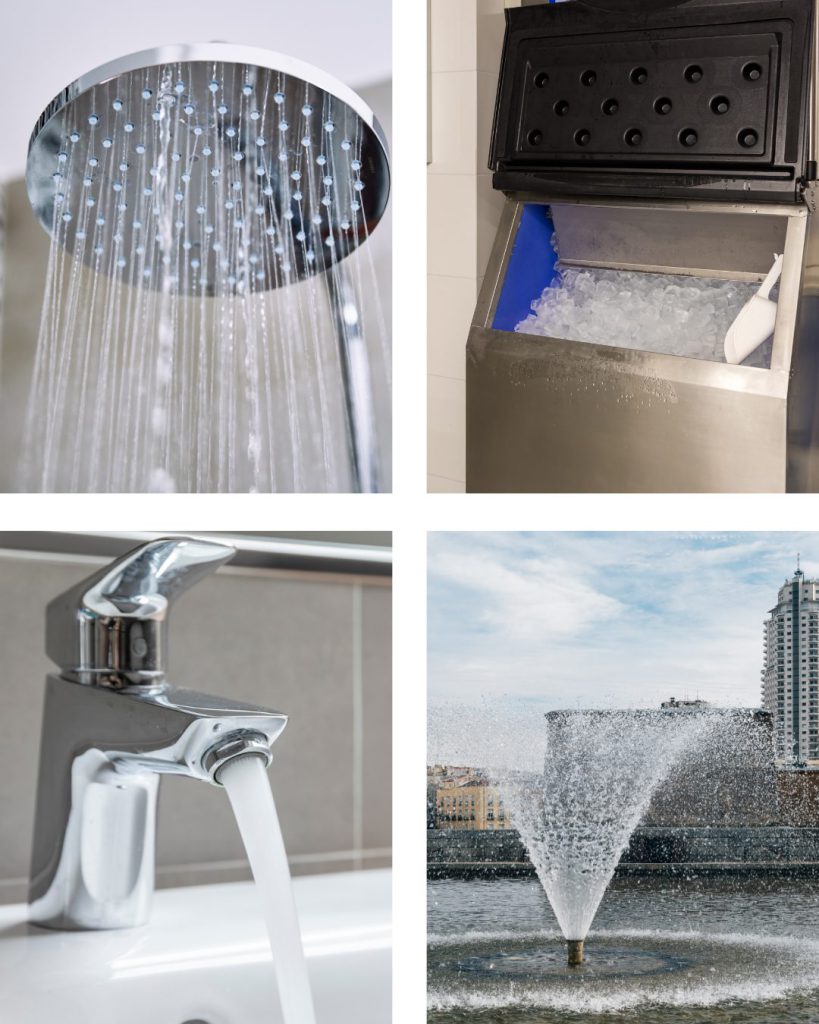
Individual cases are frequently associated with potable water systems inside buildings, including:
- Hot water systems
- Showers
- Faucets
- Decorative water features
- Ice machines
- Other plumbing components
Any building water system capable of supporting bacterial growth deserves careful management.
The Future of Water Management
The next generation of Legionella prevention is already emerging.
New technologies are making it possible to identify problems much faster than traditional laboratory methods.
Emerging innovations include:
- Viability qPCR and digital PCR
- Flow cytometry
- Next-generation sequencing (NGS)
- Smart IoT sensors that continuously monitor temperature, disinfectant levels, pH, and water flow
- Artificial intelligence for predictive risk modeling
Researchers are also taking a more holistic approach to risk assessment by studying the broader microbial ecosystem within building water systems including biofilms, free-living amoebae, and microbial interactions that help Legionella survive.
The Biggest Lesson After 50 Years
Perhaps the most important lesson from the past 50 years is that preventing Legionnaires’ disease requires more than occasional testing.
Effective water management is an ongoing process that combines risk assessment, monitoring, documentation, maintenance, and continuous improvement.
As regulations continue to evolve and scientific understanding advances, organizations that adopt proactive water management strategies will be better positioned to protect building occupants, maintain compliance, and reduce the risk of future outbreaks.
After five decades of lessons, one thing is clear: safer buildings begin with smarter water management.