
Legionella bacteria are commonly associated with warm water systems like cooling towers, hot tubs, or poorly maintained domestic hot water systems. While warm temperatures absolutely create the ideal environment for Legionella growth, many facility managers and building owners ask an important question:
Can Legionella grow in cold water?
The short answer is: Legionella does not actively multiply in properly maintained cold water systems, but it can survive and under certain conditions, cold water systems can still become a source of Legionella exposure.
Understanding how temperature impacts Legionella growth is critical for maintaining a safe water management program and reducing risk throughout a building’s water system.
The Temperature Range Where Legionella Thrives
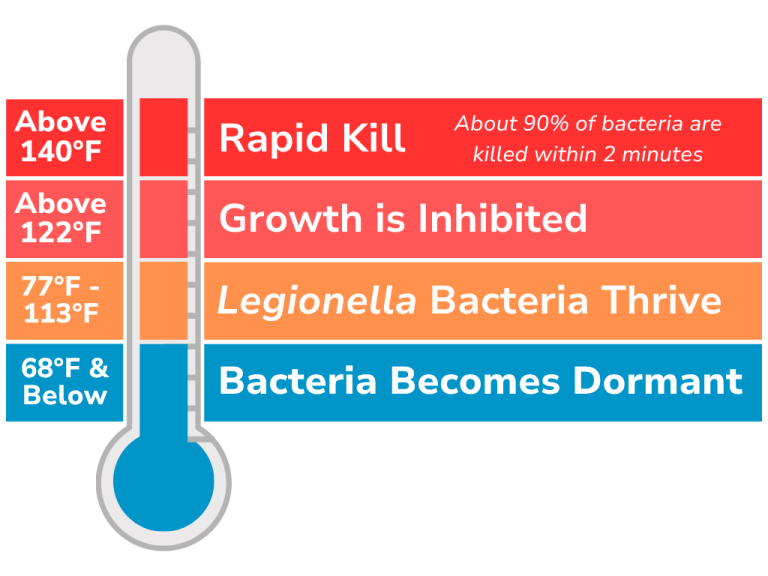
Legionella bacteria are highly influenced by water temperature. Their behavior generally falls into the following ranges:
- Below 68°F (20°C): Legionella survive but remain largely dormant
- 77°F–113°F (25°C–45°C): Ideal growth range
- 95°F–115°F (35°C–46°C): Rapid multiplication occurs
- Above 122°F (50°C): Growth begins to slow
- 140°F (60°C) and above: Legionella begins to die off
Because of this, most Legionella prevention strategies focus heavily on maintaining proper hot water temperatures and ensuring cold water stays sufficiently cold. We like to tell our clients to “keep the hot water hot, and the cold water cold”.
Can Legionella Survive in Cold Water?
Yes. Even if water temperatures are below the optimal growth range, Legionella bacteria can still survive in cold water systems for extended periods of time.
This becomes problematic when “cold” water is not truly cold. In many facilities, cold water temperatures can rise due to:
- Poor pipe insulation
- Heat transfer from surrounding mechanical spaces
- Low water usage or stagnation
- Oversized plumbing systems
- Seasonal temperature increases
- Dead legs or infrequently used outlets
If cold water temperatures creep above 68°F (20°C), the environment can become increasingly favorable for bacterial survival and eventual growth.
Why Ice Machines Deserve More Attention
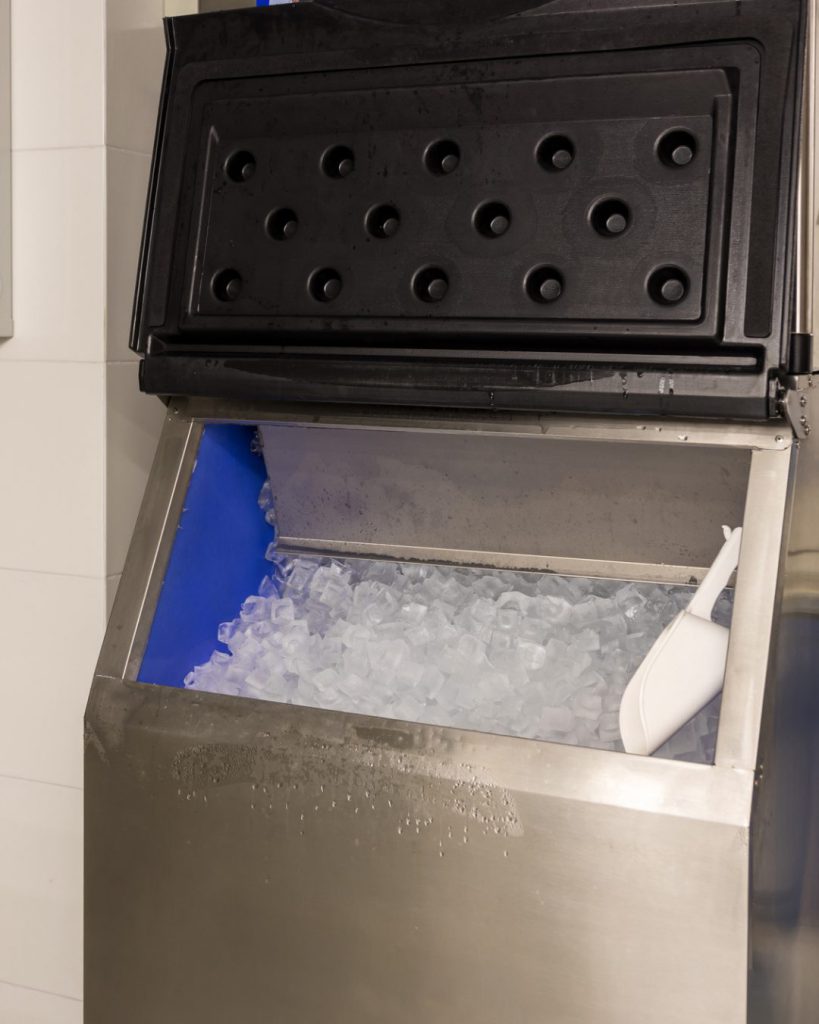
One commonly overlooked source of bacterial contamination is the commercial ice machine.
Many people assume ice is inherently safe because it is frozen. However, ice machines can harbor bacteria, including Legionella and other waterborne pathogens if they are not properly maintained.
During ice production, water may briefly warm before freezing due to the ice machine’s refrigeration process. The system uses a compressor, condenser, expansion valve, and evaporator to remove heat from the water and form ice. During the harvest cycle, warm refrigerant is sent through the evaporator to release the ice, which can slightly warm water remaining in the machine. Heat from the compressor, recirculation pump, and surrounding environment can also contribute to temporary increases in water temperature before it ultimately freezes.
How Ice Machines Become Contaminated
Ice machines contain multiple components where moisture, biofilm, and organic buildup can accumulate, including:
- Water reservoirs
- Internal tubing
- Drain lines
- Ice bins
- Evaporator plates
- Filters and dispensing mechanisms
Even though the ice itself is frozen, portions of the machine often operate in temperature ranges that allow bacteria to survive. Areas with standing water or intermittent moisture create ideal conditions for biofilm development.
Biofilm is especially concerning because it protects bacteria from disinfectants and allows microorganisms to persist within the system.
Legionella Risks Associated with Ice Machines
While Legionella are most commonly transmitted through inhalation of contaminated water aerosols, contaminated ice can still pose a health risk. For example, if someone is chewing ice and accidentally inhales or aspirates small pieces or water droplets into their airway, bacteria present in the ice or meltwater can potentially enter the lungs. This is one reason why proper cleaning and maintenance of ice machines is an important part of a comprehensive water management program.
Additional ways ice machines can still contribute to risk include:
- Contaminated meltwater can spread bacteria
- Aerosols may form during dispensing or cleaning
- Poorly maintained machines can support broader microbial contamination
- Cross-contamination can occur through handling and storage practices
Healthcare facilities, hotels, long-term care facilities, and other high-risk buildings should pay close attention to ice machine maintenance as part of their overall water management strategy.
Common Warning Signs of Ice Machine Contamination
Facilities should monitor for indicators that an ice machine may require cleaning or maintenance, including:
- Slime or visible biofilm
- Mold growth
- Musty odors
- Scale buildup
- Cloudy or oddly shaped ice
- Slow ice production
- Water leaks or standing water
Routine inspection should be performed because contamination often develops gradually and out of sight.
Best Practices for Temperature Control and Legionella Prevention
Maintaining proper water temperatures throughout the building is one of the most effective Legionella control measures.
For Cold Water Systems:
- Keep cold water below 68°F (20°C)
- Insulate cold water piping
- Eliminate dead legs and stagnant areas
- Flush infrequently used outlets regularly
- Monitor temperatures consistently
For Hot Water Systems:
- Store hot water at or above 140°F (60°C) where appropriate
- Maintain circulation temperatures above 122°F (50°C)
- Verify balancing throughout the system
- Regularly test and document temperatures
For Ice Machines:
- Follow manufacturer cleaning schedules
- Sanitize all internal surfaces routinely
- Replace filters as recommended
- Inspect for slime, scale, and standing water
- Ensure proper drainage
- Include ice machines in your water management plan
Water Management Plans Should Include Cold Water Systems
Many organizations focus heavily on domestic hot water systems but underestimate risks associated with cold water distribution and ancillary equipment like ice machines.
A comprehensive water management plan should evaluate:
- Cold water temperatures
- Areas of stagnation
- Equipment connected to potable water systems
- Aerosol-generating devices
- Preventive maintenance procedures
- Routine monitoring and documentation
Even systems not traditionally viewed as “high-risk” can become problematic when temperature control and maintenance practices break down.
Cold Doesn't Mean Risk-Free
Legionella bacteria may not actively thrive in properly maintained cold water, but that does not mean cold water systems are risk-free. Poor temperature control, stagnation, and inadequate maintenance can create opportunities for bacteria to survive and spread.
Ice machines are a perfect example of an often-overlooked component of the facility that can harbor biofilm and bacteria if not regularly cleaned and monitored.
Effective Legionella prevention requires a proactive approach that includes:
- Consistent temperature control
- Routine flushing
- Preventive maintenance
- Equipment inspection
- Comprehensive water management planning
By understanding how temperature impacts bacterial growth and by paying attention to all parts of the water system, including ice machines, facilities can significantly reduce risk and improve overall water safety.
Protect Your Facility From Hidden Water Safety Risks
IWC Innovations can help you develop, review, and strengthen your water management plan to better address Legionella risk across your entire building water system, including often-overlooked equipment like ice machines.
Contact our team today to take a proactive approach to water safety.
866-761-1600