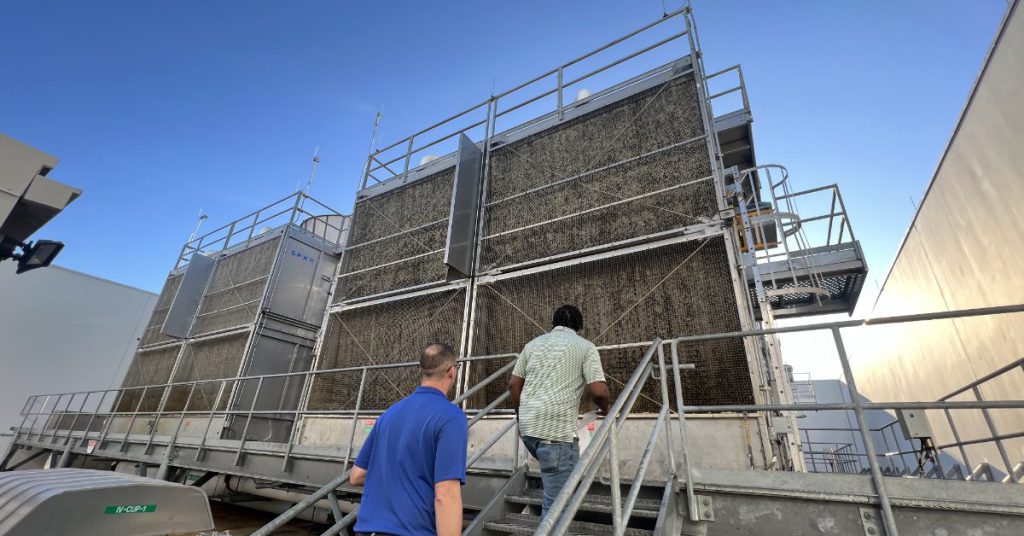

As temperatures rise, facility managers and building owners across industries begin preparing their cooling towers for spring startup. After months of inactivity, restarting your cooling tower the right way not only helps with performance for the season, but also for Legionella growth prevention.
Why Cooling Tower Startup Matters
Cooling towers typically start back up in the spring because the conditions that require heat rejection return. During winter, many systems either shut down or run at reduced capacity, but spring marks the transition back to full operation.
A poorly executed startup can lead to:
- Bacterial growth, including Legionella growth risk
- Reduced system efficiency
- Equipment damage and costly repairs
- Compliance issues with ASHRAE Standard 188 and local regulations
That’s why a structured cooling tower startup procedure should be followed yearly when bringing your cooling tower back online for the season.
How to Properly Startup Your Cooling Tower
At IWC Innovations, we understand how significant proper cooling tower startups are. As warmer months approach and system demand increases, it’s key to ensure your cooling tower is fully prepared to handle the extended summer workload. To ensure proper start up, we recommend the following approach:
1. Inspect the Cooling Tower System
Before turning anything on, perform a full inspection:
- Check for visible debris, scale, and corrosion
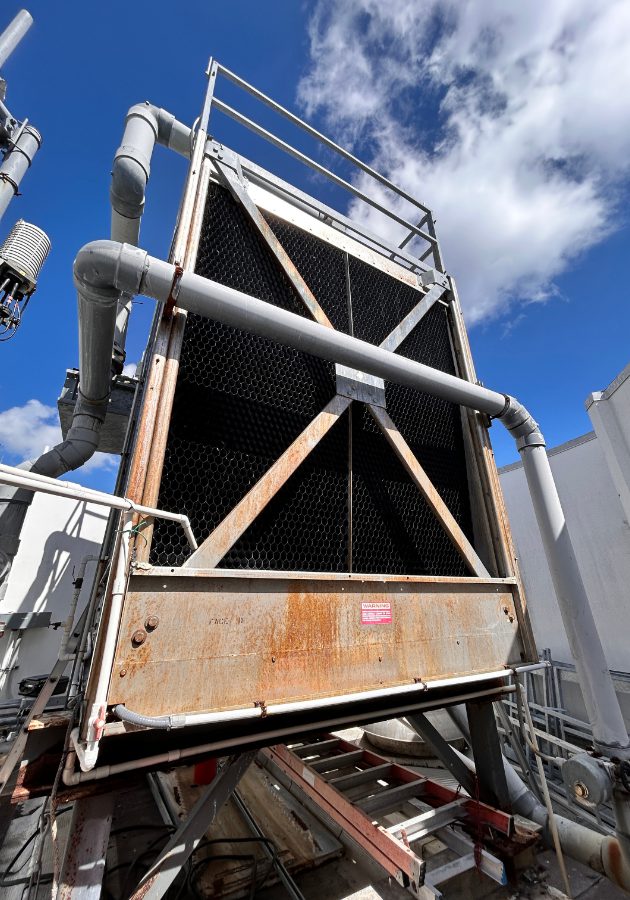
- Inspect fill media, drift eliminators, and basin condition
- Verify mechanical components (fans, motors, belts)
2. Clean and Disinfect the System
If your system has been idle, it’s possible that biofilm and bacteria may have developed.
- Drain and clean the basin
- Remove sludge and organic buildup
- Perform a cooling tower disinfection using appropriate biocides
This step is important for Legionella growth control in cooling towers.
3. Refill and Flush the System
Once cleaned:
- Refill with fresh water
- Circulate and flush the system to remove residual contaminants
- Check for leaks or abnormal flow
4. Start Water Treatment Program
A proper cooling tower water treatment program should be in place before startup.
This includes:
- Scale inhibitors
- Corrosion inhibitors
- Biocide treatment
Partnering with expert water treaters like IWC Innovations will ensure your system is protected from day one.
5. Test Water Quality
Before full operation, test key parameters:
- pH levels
- Conductivity
- Microbial counts
Routine testing supports cooling tower compliance and system longevity.
6. Verify System Operation
Now that you’ve completed steps 1-5, you’re ready to power up your system.
- Start pumps and fans gradually
- Monitor vibration, noise, and performance
- Ensure proper water distribution
7. Review Your Water Management Plan
Spring startup is the perfect time to revisit your water management plan (WMP).
Ask:
- Is your plan aligned with ASHRAE 188 guidelines?
- Are monitoring and documentation procedures up to date?
- Are your team members trained?
If not, it may be time to implement or update your plan with help from IWC Innovations
Common Mistakes to Avoid
The startup process can take a few hours, and cutting corners can cause issues in the long run. Many facilities run into trouble by:
- Skipping disinfection before startup
- Delaying water treatment implementation
- Ignoring documentation and compliance requirements
- Assuming systems are “fine” after winter shutdown
These shortcuts can lead to serious health risks and operational downtime.
How IWC Innovations Helps
A proper spring cooling tower startup sets the tone for your entire cooling season. By following a structured process and partnering with experts, you can:
- Reduce health risks
- Improve system performance
- Extend equipment life
- Stay compliant with regulations
At IWC Innovations, we go beyond traditional water treatment. We provide:
- Custom water management plans
- Legionella risk assessments
- Cooling tower startup support
- Ongoing compliance and monitoring tools
Our goal is to help facilities keep their cooling towers safe, compliant, and efficient year-round.
Need Help with Your Cooling Tower Startup?
Don’t leave your system to chance this season.
Contact IWC Innovations today to ensure your cooling tower startup is done right.
866-761-1600