


Exploring Amoeba
In the vast tapestry of life on Earth, the amoeba stands out for its simplicity and unique characteristics. This microscopic organism, often found in pond water, soil, and other environments rich in moisture, provides a glimpse into the basic forms of life. In this blog, we’ll explore what an amoeba is, their biological classification, how they move, what they eat, and their method of reproduction.
What is an Amoeba?
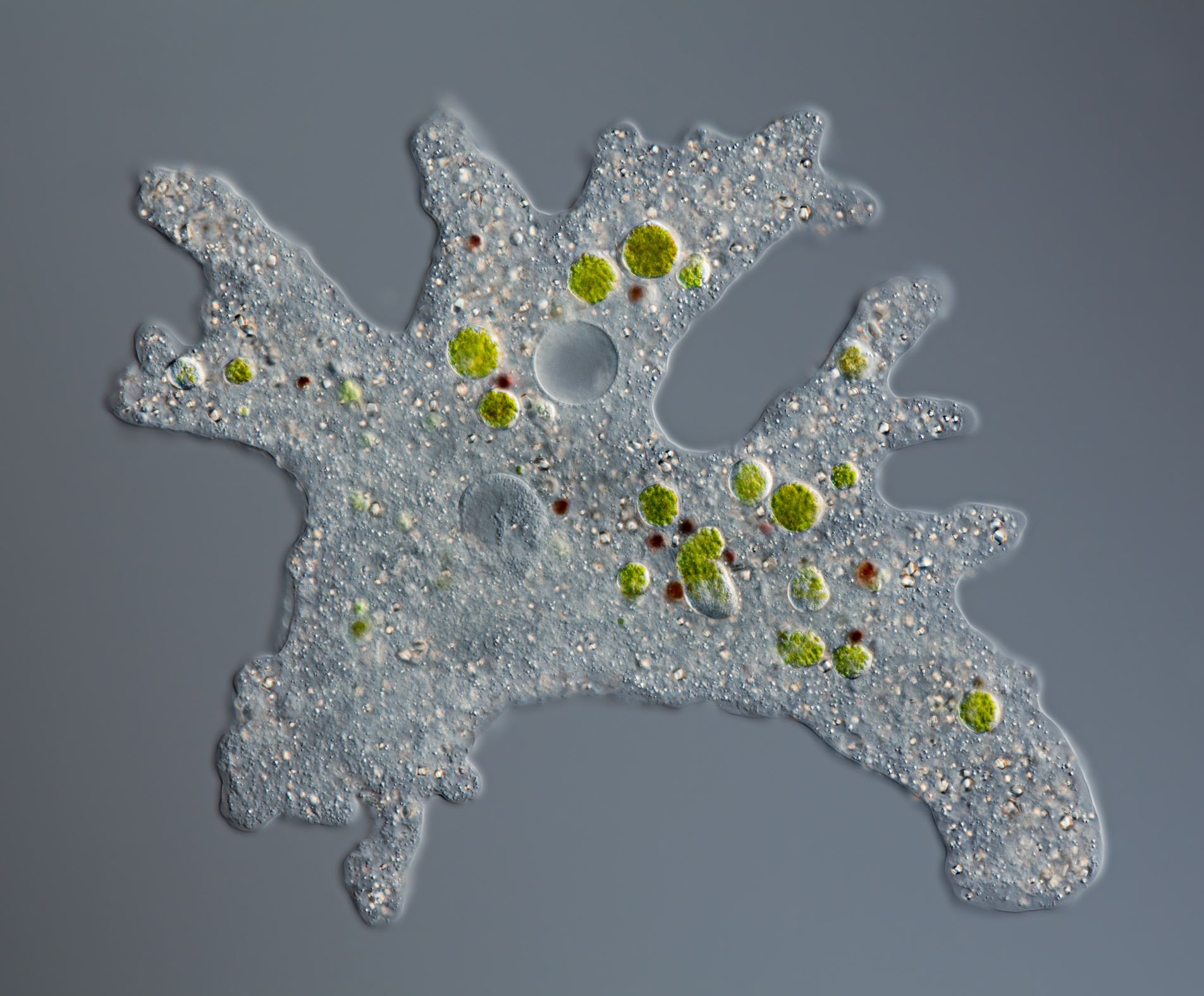 An amoeba is a single-celled organism that belongs to the group of organisms known as protozoa. Typically, amoebas are found in freshwater environments, but some species inhabit saltwater, soil, and even man-made water systems. The most commonly studied species in science classes is Amoeba proteus, used for demonstrating basic biological processes.
Amoebas are distinguished by their amorphous shape. Unlike most cells, which have a fixed shape, amoebas constantly change their form. This flexibility is due to their gel-like cytoplasm which enables them to move and ingest food through a process called phagocytosis.
Is an Amoeba a Bacteria?
No, an amoeba is not a bacteria. Although both amoebas and bacteria are microscopic and single-celled, they belong to different categories of organisms. Bacteria are prokaryotes, meaning they lack a defined nucleus and other membrane-bound organelles. Amoebas, on the other hand, are eukaryotes, which means they have a well-defined nucleus and are more complex on a cellular level. This distinction is crucial in microbiology and helps in understanding the fundamental differences in the biological classification and structure of these organisms.
How Does an Amoeba Move?
The movement of an amoeba is both fascinating and unique, called “amoeboid movement.” It moves by extending and retracting temporary protrusions called pseudopodia (or false feet). These extensions are created when the cytoplasm flows forward in the direction of movement, forming a frontal bulge. This method of movement not only helps the amoeba navigate through its environment but also assists in capturing food particles by engulfing them.
What Does an Amoeba Eat?
Amoebas are heterotrophs, meaning they must ingest their food for energy rather than producing it themselves as plants do through photosynthesis. They feed on bacteria, algae, plant cells, and microscopic protozoa. Feeding occurs through a process called phagocytosis, where the amoeba encircles its prey with pseudopodia, forming a food vacuole where enzymes break down the food.
How Do Amoeba Reproduce?
Amoebas reproduce asexually through a process known as binary fission. This method involves the nucleus of the amoeba dividing into two parts (mitosis), followed by the division of the cytoplasm (cytokinesis), resulting in two genetically identical amoeba. This process can occur rapidly under ideal conditions, allowing amoeba populations to increase swiftly.
The Amoeba – Legionella Connection
Legionella bacteria have a well-documented symbiotic relationship with amoeba, particularly in aquatic environments. The amoeba provides a protective habitat for Legionella, shielding them from adverse environmental conditions while allowing them to replicate within the amoeba’s cysts. This interaction is crucial for the bacteria’s survival and proliferation, as it enhances their resistance to disinfection methods and facilitates their transmission to human hosts, potentially leading to Legionnaires’ disease when contaminated water aerosols are inhaled.
A Microscopic Marvel
The amoeba, though simple in structure, plays a significant role in understanding fundamental biological processes and interactions within ecosystems. From its flexible, ever-changing form to its unique method of movement and reproduction, the amoeba showcases the diversity and adaptability of life at the microscopic level. Its relationship with other microorganisms, such as the Legionella bacteria, highlights the amoeba’s importance in both natural environments and public health. As we continue to study these fascinating organisms, their impact on ecosystems and human health becomes even more apparent, reinforcing the value of microbiology in understanding the delicate balance of life.